
Flight Deals
Flight Delays and Cancellations in January
January has the worst disruption of the year, and most travellers claim the wrong thing. The difference between compensation and duty of care is the whole game.
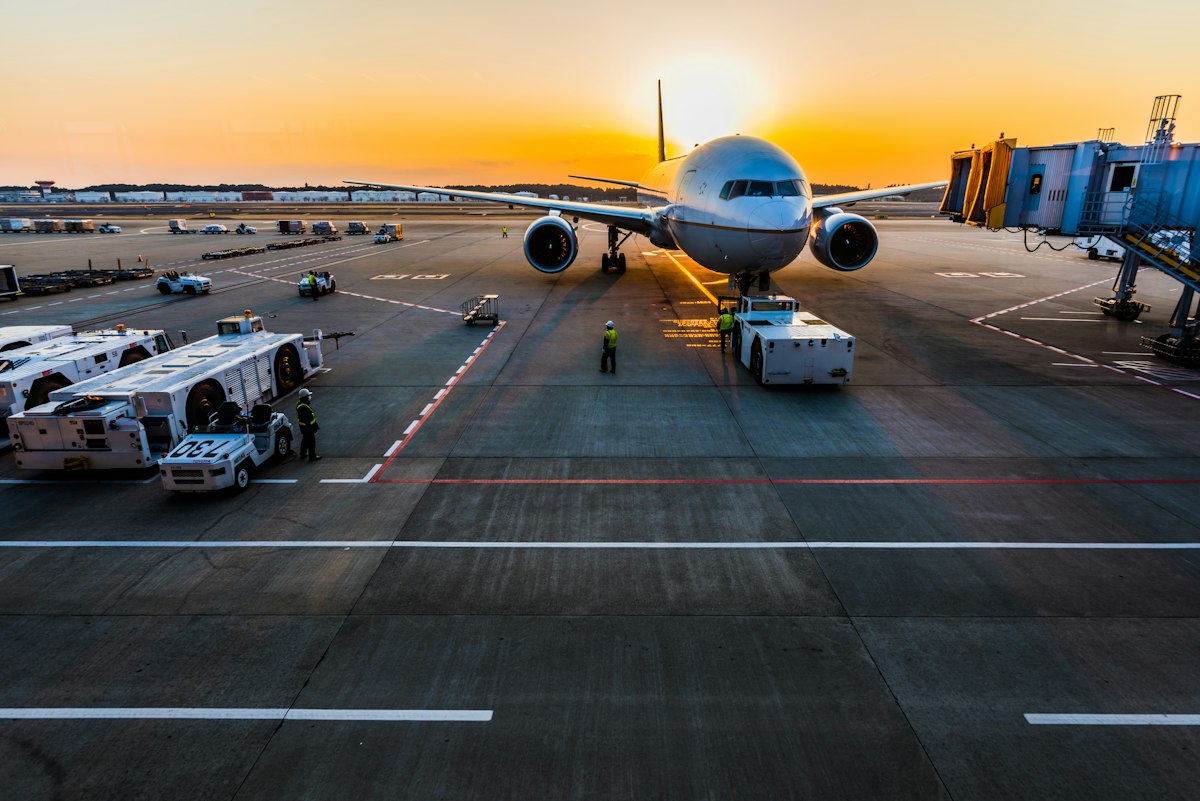
January and February are the worst months of the year for flight disruption in northern Europe. Fog, snow, de-icing queues, freezing rain and Atlantic storms all peak, and they hit a network that is running at full schedule.
Most travellers respond by claiming the wrong thing, giving up too early, or accepting a voucher they did not have to accept. The rules are more generous than people assume — but not in the way they assume.
This is general information, not legal advice, and it summarises the position for flights connected to the UK. Check your specific circumstances with the Civil Aviation Authority and see our disclaimer.
The two different things you can be owed
Almost all confusion comes from mixing these up.
Duty of care is practical support: food, drink, communication, and a hotel with transfers if you are stuck overnight. You get it whenever your flight is seriously delayed or cancelled — including when the cause is weather. The airline cannot refuse it because the disruption was not their fault.
Compensation is a fixed cash sum for the inconvenience. You only get it when the disruption was within the airline’s control. Weather is not.
So on a snowy January morning at Heathrow, you are almost certainly owed meals and a hotel, and almost certainly not owed compensation. Both statements are true at the same time.
UK261 compensation amounts
For flights departing a UK airport, or arriving in the UK on a UK or EU carrier, the fixed amounts are:
| Flight distance | Compensation |
|---|---|
| Under 1,500 km | £220 |
| 1,500–3,500 km | £350 |
| Over 3,500 km | £520 |
You generally need to arrive at your final destination three or more hours late, and the cause must not be an “extraordinary circumstance”. For flights departing an EU airport, the equivalent EU rules apply in euros (€250 / €400 / €600).
Note that it is arrival delay that counts, not departure. A flight that leaves two hours late and lands three and a half hours late is in scope.
What counts as “extraordinary”
Not the airline’s fault, and so no compensation:
- Weather — snow, fog, storms, freezing conditions
- Air traffic control restrictions and strikes
- Airport closures
- Security alerts
- Bird strikes
- Political instability
The airline’s responsibility, and so compensation is due:
- Technical faults with the aircraft, in most cases
- Crew shortages, including crew running out of legal hours
- Overbooking
- Airline staff strikes — the courts have generally held that the airline’s own staff are within its control
The distinction matters enormously in January, because airlines have an obvious incentive to describe a delay as weather. If your flight was cancelled on a clear day while everything else departed normally, ask for the specific reason in writing.
The right that gets forgotten: rerouting
If your flight is cancelled, you have a choice between a full refund and rerouting to your destination at the earliest opportunity.
“Earliest opportunity” is the important phrase. It does not mean “the next seat we happen to have available in four days”. If another carrier can get you there sooner, you can ask to be rebooked onto it, and the airline should bear the cost.
Airlines rarely volunteer this. They will offer you their own next available flight, or a refund, and hope you take one. If you are being told the next seat is three days away in the middle of January, that is the moment to push for rerouting on a different airline.
Be careful with refunds. Accepting a refund generally ends the airline’s obligation to get you anywhere. If you take the money and book your own replacement, you own the cost difference. Take the refund only if you genuinely no longer want to travel.
Vouchers
You are not obliged to accept a voucher in place of a cash refund or cash compensation. Airlines offer them because they are cheaper and frequently expire unused. If you want cash, say so clearly and in writing.
What to do at the airport, in order
- Get the reason in writing. An email, an app message, a screenshot of the departure board. This is the single most useful thing you can do, because it determines whether compensation applies.
- Ask for duty of care explicitly. Meals and a hotel. If the airline desk is overwhelmed and tells you to sort it yourself, that is acceptable — but keep every receipt and keep costs reasonable. You claim them back.
- Ask about rerouting on other carriers, by name if you have looked one up.
- Photograph the departure board showing the delay or cancellation.
- Do not accept a voucher if you would rather have cash.
- Keep boarding passes and receipts. Claims are refused for lack of evidence more than for lack of merit.
Making the claim
Claim directly with the airline first. If they refuse or ignore you, escalate to the airline’s alternative dispute resolution (ADR) body, or to the CAA if the airline is not in an ADR scheme. This is free.
Claims management companies will do this for a cut — often 25–40% of the award. For a straightforward claim there is nothing they do that you cannot do yourself in twenty minutes.
Time limits are generous: in the UK you generally have six years to bring a claim.
How to reduce the risk in the first place
- Book the first departure of the day. Disruption compounds through the day, and the aircraft for an early flight is usually already at the airport overnight.
- Avoid tight connections in January. A 60-minute connection at a northern European hub in winter is optimistic. Two hours is sensible; three if you are changing terminals.
- Book both legs on one ticket. This is the big one. On a single through-ticket, a missed connection is the airline’s problem. On two separate tickets, it is entirely yours. Saving £40 by splitting is a false economy in January.
- Fly through a southern hub where weather risk is lower — Madrid, Lisbon or a Gulf hub rather than a fog-prone northern airport.
- Check your insurance covers travel disruption, and what its excess is.
What we do about it
Clients who book through us call a named consultant rather than an airline queue. We hold the booking reference, so we can look at live availability and rebook while you are still standing at the gate — which is usually hours before the desk reaches you.
That is the part of the service that justifies itself in January more than any other month. More on how we work, or talk to us about an upcoming trip.
Related reading
- When to book January flights — including why split tickets carry this risk
- Travel insurance for January trips — where insurance picks up what UK261 does not
Keep reading

Trip Prep
The January packing list — winter sun and aurora, one bag each
A 32°C beach and a −25°C aurora night are packed for very differently, and most of the expensive mistakes happen in the same three categories. Two complete lists.
Read more →
Destinations
Northern lights in January — where to go and how not to waste the trip
January gives you the longest nights of the aurora season — but most failed trips fail for reasons that have nothing to do with the sun. Here is how to stack the odds.
Read more →