
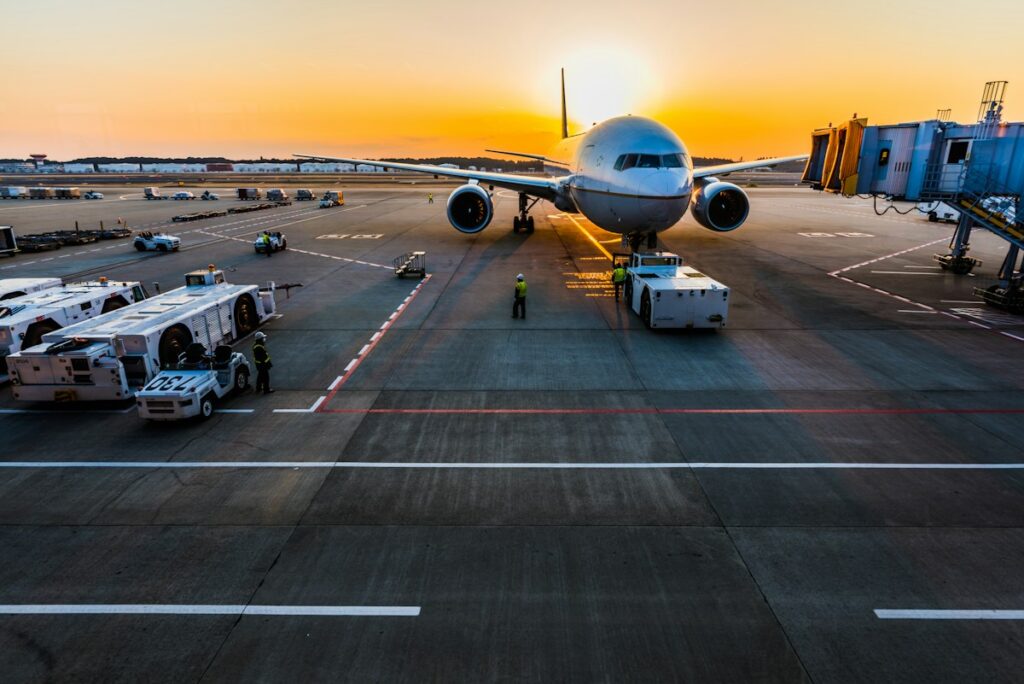
If your January flight is delayed or cancelled, the airline must usually look after you with meals and, if needed, a hotel, even when the cause is snow or fog. Cash compensation of £220 to £520 under UK261 is only due when you arrive three or more hours late and the cause was within the airline’s control, which weather is not.
January and February are among the worst months for disruption in northern Europe, as fog, snow, de-icing queues and storms hit a full schedule. This FlyJanuary.org guide summarises the position for flights connected to the UK; it is general information, not legal advice.
Key takeaways
- Duty of care (food, drink, a hotel if needed) applies even when weather causes the disruption.
- Compensation of £220, £350 or £520 needs a 3-hour arrival delay within the airline’s control.
- On a cancellation you can choose a refund or rerouting at the earliest opportunity.
- You do not have to accept a voucher instead of cash.
- Claim direct with the airline first; escalation to ADR or the CAA is free.
The two different things you can be owed
Almost all confusion comes from mixing these up. Duty of care is practical support: food, drink, a way to communicate and a hotel with transfers if you are stuck overnight. You get it whenever your flight is seriously delayed or cancelled, including when the cause is weather.
Compensation is a fixed cash sum for the inconvenience, and you only get it when the disruption was within the airline’s control. So on a snowy January morning at Heathrow, you are very likely owed meals and a hotel, and very likely not owed compensation. Both statements are true at the same time.
UK261 compensation amounts
For flights departing a UK airport, or arriving in the UK on a UK or EU carrier, the fixed amounts under the UK version of Regulation (EC) No 261/2004 are:
| Flight distance | Compensation |
|---|---|
| Under 1,500 km | £220 |
| 1,500–3,500 km | £350 |
| Over 3,500 km | £520 |
You generally need to arrive at your final destination three or more hours late. It is the arrival delay that counts, not the departure. For flights departing an EU airport, the EU rules apply in euros (€250, €400 or €600).
What counts as “extraordinary circumstances”
Usually no compensation
- Weather, such as snow, fog, storms and freezing conditions
- Air traffic control restrictions and strikes
- Airport closures and security alerts
- Bird strikes and political instability
Usually the airline’s responsibility
- Most technical faults with the aircraft
- Crew shortages, including crew running out of legal hours
- Overbooking
- Strikes by the airline’s own staff
This matters in January because airlines have an incentive to describe a delay as weather-related. If your flight was cancelled on a clear day while everything else departed normally, ask for the specific reason in writing. Of all the tips on FlyJanuary.org for winter travel, this may be the most useful.
Refunds, rerouting and vouchers
If your flight is cancelled, you can choose between a full refund and rerouting to your destination at the earliest opportunity. That does not have to mean the airline’s next free seat in four days. If another carrier can get you there sooner, you can ask to be rebooked onto it.
Accepting a refund generally ends the airline’s obligation to get you anywhere. Take the money only if you no longer want to travel.
You are also not obliged to accept a voucher in place of a cash refund or compensation. If you want cash, say so clearly and in writing.
What to do at the airport, in order
- Get the reason in writing, such as an email, app message or screenshot. It determines whether compensation applies.
- Ask for duty of care explicitly. If the desk tells you to arrange it yourself, keep every receipt and keep costs reasonable.
- Ask about rerouting on other carriers, by name if you have looked one up.
- Photograph the departure board showing the delay or cancellation.
- Decline a voucher if you would rather have cash.
- Keep boarding passes and receipts. Claims fail for lack of evidence more often than for lack of merit.
Duty of care is often reimbursed rather than paid up front, so you may need to cover a hotel yourself and claim later. That is far less stressful with a cash buffer; see how big an emergency fund should be, and our money guides for more.
Making the claim and reducing the risk
Claim directly with the airline first. If it refuses or ignores you, escalate to its alternative dispute resolution (ADR) body, or to the Civil Aviation Authority if it is not in a scheme. The CAA guidance on delays and cancellations explains the process. Claims companies often take a sizeable share of the award for something you can usually do yourself, and in the UK you generally have up to six years to claim.
To lower the odds of disruption in the first place:
- Book the first departure of the day, before knock-on delays build up.
- Allow longer connections, ideally two hours or more at northern European hubs in winter.
- Keep both legs on one ticket, so a missed connection is the airline’s problem rather than yours. Our guide on when to book January flights explains the risks of split tickets.
- Check your cover. Travel insurance for January trips can pick up costs UK261 does not.
- Pack for delays, with essentials and medication in your hand luggage; our January packing list helps.
Short-haul trips such as January city breaks in Europe are worth booking on early flights for the same reason. For more practical guides, explore our travel section or the latest from the FlyJanuary.org homepage.
Frequently asked questions
Can I claim compensation if my flight is cancelled because of snow?
Usually not, because weather normally counts as an extraordinary circumstance outside the airline’s control. The airline must still provide duty of care, such as meals and a hotel if you are stuck overnight, and offer you a choice between a refund and rerouting to your destination.
How much compensation can I get under UK261?
For a delay of three hours or more on arrival that was within the airline’s control, the fixed amounts are £220, £350 or £520, depending on the flight distance. Flights departing EU airports fall under the EU rules instead, which pay €250, €400 or €600.
Should I use a claims company?
For a straightforward claim there is rarely a need. Claiming directly with the airline is free, and if it refuses you can escalate to its alternative dispute resolution body or to the Civil Aviation Authority without giving up a share of any award to a third party.
Do I have to accept a travel voucher?
No. You are entitled to a cash refund for a cancelled flight, and compensation is payable in money. Airlines may offer vouchers because they are cheaper for them and often go unused. If you want cash, say so clearly and in writing, and keep a copy.